Research · reconfigurable computing
FPGA-based acceleration of AI and machine learning
An investigation of whether Xilinx Zynq fabric and Vivado can accelerate neural-network inference — and why theoretical flexibility did not turn into a practical speedup on a constrained device.
Contents
Introduction
Artificial intelligence and machine learning applications have become increasingly computationally demanding as models have grown in size and complexity. Modern neural networks may require millions or billions of mathematical operations to perform a single inference, creating a need for specialized hardware capable of efficiently executing large numbers of matrix multiplications and other repetitive operations. Graphics processing units (GPUs) have become the dominant hardware platform for this type of computation because they provide large numbers of parallel processing elements and are supported by mature software frameworks. However, field-programmable gate arrays (FPGAs) provide another potential approach to accelerating artificial intelligence workloads.
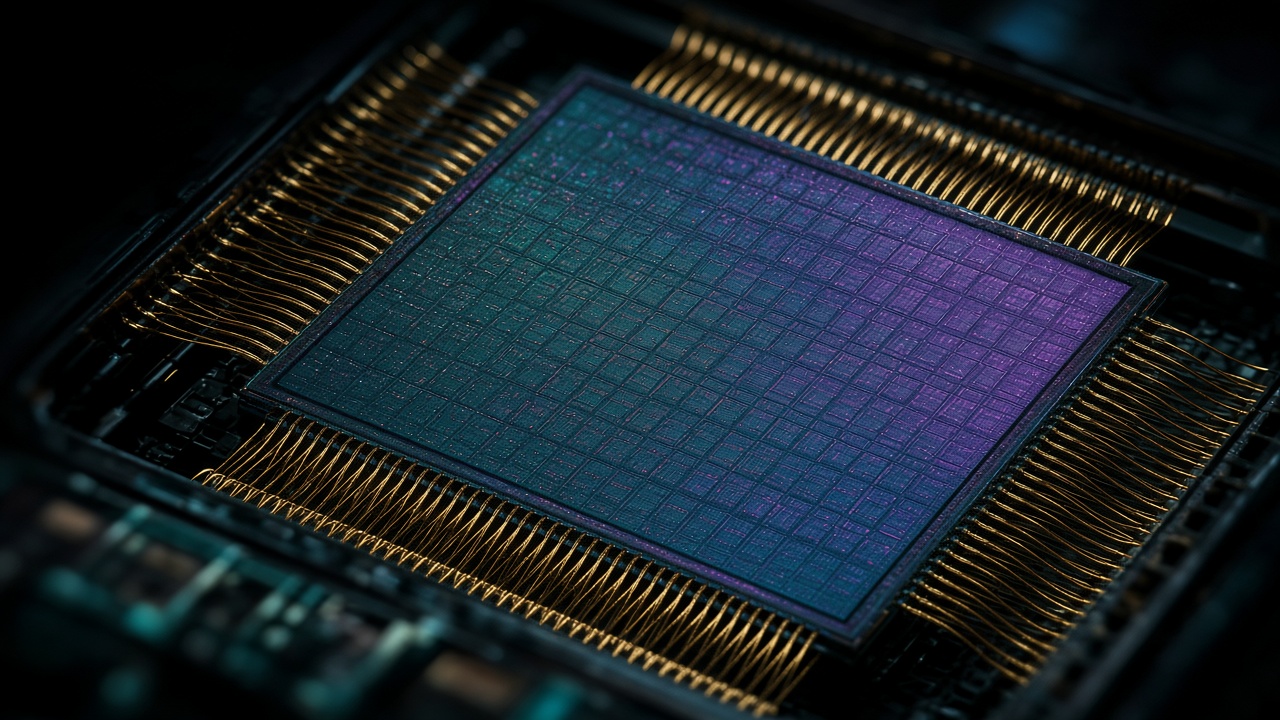
Unlike a conventional CPU or GPU, an FPGA does not have a fixed computational architecture. Instead, its internal logic can be configured to implement specialized digital circuits designed for a particular problem. In theory, this allows an FPGA to create a hardware architecture specifically optimized for the operations required by a neural network. Operations such as multiplication, addition, activation functions, data movement, and even entire neural-network layers can potentially be implemented as parallel hardware pipelines.
The purpose of this research was to investigate the practicality of using FPGA hardware for artificial intelligence acceleration. The project focused not only on whether machine-learning computations could be implemented on an FPGA, but also on the engineering effort required to develop and optimize such a system. Development was performed within the Xilinx FPGA ecosystem, including Vivado, using a Xilinx Zynq-based development environment. The work demonstrated that FPGA acceleration is technically interesting and offers significant architectural flexibility, but it also revealed substantial practical limitations. In particular, relatively small FPGA devices provide limited computational resources, development and optimization in Vivado can be difficult, and running modern AI models efficiently requires considerably more hardware-specific engineering than performing the same task on a GPU.
Ultimately, the research did not demonstrate the performance improvement that was originally hoped for. Rather than making the project unsuccessful, however, this result highlighted the difference between the theoretical advantages of reconfigurable computing and the practical difficulties of using FPGAs for contemporary machine-learning workloads.
Background
Machine-learning inference consists primarily of large numbers of relatively simple mathematical operations. A typical neural network accepts input values and passes them through multiple layers. In a fully connected layer, input values are multiplied by weights and accumulated before an activation function is applied. Convolutional neural networks perform similar multiply-and-accumulate operations over image regions, while more recent transformer architectures rely heavily on large matrix multiplications.
These operations are well suited to parallel computation. CPUs can execute machine-learning models, but their relatively small number of general-purpose cores limits their ability to perform thousands of mathematical operations simultaneously. GPUs address this problem using hundreds or thousands of simpler processing units. This architecture makes GPUs especially effective at matrix operations and has led to the widespread use of GPU computing for machine learning.

An FPGA approaches the problem differently. Instead of executing instructions on a large collection of processors, the FPGA can be configured to directly implement the required computation as digital logic. For example, several multipliers and adders can be connected into a pipeline so that data continuously flows through the circuit. Multiple copies of these circuits can operate simultaneously, creating significant parallelism.
This approach has several theoretical advantages. Because unnecessary general-purpose processor functionality can be removed, FPGA implementations can potentially provide good performance per watt. Bit widths can also be customized. A neural-network implementation does not necessarily need 32-bit floating-point arithmetic for every calculation. A hardware implementation could instead use 16-bit, 8-bit, or even smaller integer representations when the model allows it. Reducing numerical precision decreases storage requirements and allows more arithmetic units to fit within a fixed amount of FPGA fabric.
FPGAs also provide deterministic behavior and allow custom interfaces to be integrated directly into an accelerator. For embedded systems, robotics, telecommunications, sensor processing, and other specialized applications, these capabilities can make FPGA-based AI acceleration attractive.
These advantages initially suggest that an FPGA should be an excellent platform for machine learning. In practice, however, realizing these benefits requires significantly more design effort than simply running a model on a conventional processor or GPU.
FPGA development and implementation
The research used the Xilinx FPGA development environment, particularly Vivado, to explore the implementation of computational hardware on an FPGA. The development platform was based around Xilinx Zynq technology, which combines programmable FPGA fabric with an ARM-based processing system. This architecture is useful for acceleration research because conventional software can execute on the processor while specialized operations are transferred to programmable hardware.
Developing an FPGA accelerator involves a very different process from conventional software development. A software programmer normally specifies a sequence of instructions and relies on the processor architecture, compiler, operating system, and libraries to determine how those instructions are executed. With an FPGA, the developer is much closer to the actual hardware architecture.
The FPGA must be synthesized, implemented, routed, and converted into a bitstream that configures the physical device. The designer must consider the availability of lookup tables, registers, block RAM, digital signal processing units, memory bandwidth, timing constraints, and communication between different portions of the design.
This complexity became one of the primary challenges of the research. Vivado is an extremely powerful engineering application, but successfully creating a functioning design does not automatically mean that the design is efficient. A hardware implementation must also meet timing constraints while remaining within the available FPGA resources.
Machine-learning models make this particularly challenging because they contain very large numbers of parameters and arithmetic operations. Implementing more calculations in parallel can increase performance, but every parallel operation requires additional hardware. Eventually the design reaches the resource limits of the FPGA. Reducing parallelism decreases resource usage but also reduces the performance advantage that motivated the use of the FPGA in the first place.
Memory presents another major limitation. Neural-network weights must be stored somewhere, and intermediate layer outputs must continuously move between memory and computational units. FPGA block RAM is extremely fast but limited in capacity. External memory provides significantly greater capacity but introduces additional latency and bandwidth constraints. As model sizes increase, data movement can become just as important as arithmetic performance.
This creates an optimization problem involving computational parallelism, memory bandwidth, FPGA resources, numerical precision, and clock frequency. Finding the proper balance proved difficult within the scope of this research.
Performance and optimization challenges

One of the main observations of the project was that FPGA hardware should not automatically be considered faster than conventional hardware simply because a computation has been implemented digitally. The achievable performance depends heavily on both the size of the FPGA and the quality of the hardware architecture.
The FPGA resources available during this research were relatively limited compared with the enormous amount of parallel computational hardware contained in a modern GPU. Although an FPGA allows very specialized circuits to be created, there are only a finite number of DSP blocks, lookup tables, registers, and memory resources available. A GPU designed specifically for highly parallel numerical computation may therefore be considerably faster for general AI workloads.
Clock frequency also contributes to the difference. Modern CPUs and GPUs operate at frequencies measured in multiple gigahertz. FPGA designs commonly operate at significantly lower clock frequencies. An FPGA can compensate for this by performing many operations simultaneously or by constructing highly efficient pipelines, but achieving enough parallelism to overcome the clock-frequency disadvantage requires significant FPGA resources.
The difficulty of optimization was another major finding. An initial FPGA implementation may function correctly while providing disappointing performance. Meaningful acceleration often requires restructuring the algorithm around the characteristics of the hardware.
For example, a neural-network layer can potentially be accelerated by processing many neurons simultaneously. This requires multiple arithmetic units operating in parallel. Those arithmetic units consume DSP and logic resources. Their input data must also arrive quickly enough to keep them active. Increasing parallelism can therefore create memory bottlenecks or routing problems. An architecture that theoretically performs many operations simultaneously may not achieve its expected performance if the hardware cannot supply data quickly enough.
Vivado must also successfully place and route the resulting design while satisfying timing requirements. As utilization becomes higher and designs become more complicated, achieving timing closure becomes increasingly challenging. Optimization therefore involves much more than modifying software or compiler settings. It can require substantial redesign of the underlying architecture.
This was one of the major practical limitations discovered during the project. The development process required considerable effort relative to the resulting performance. Tasks that are comparatively simple with GPU-based machine-learning frameworks can require detailed hardware design when targeting an FPGA.
Comparison with GPU-based AI computing
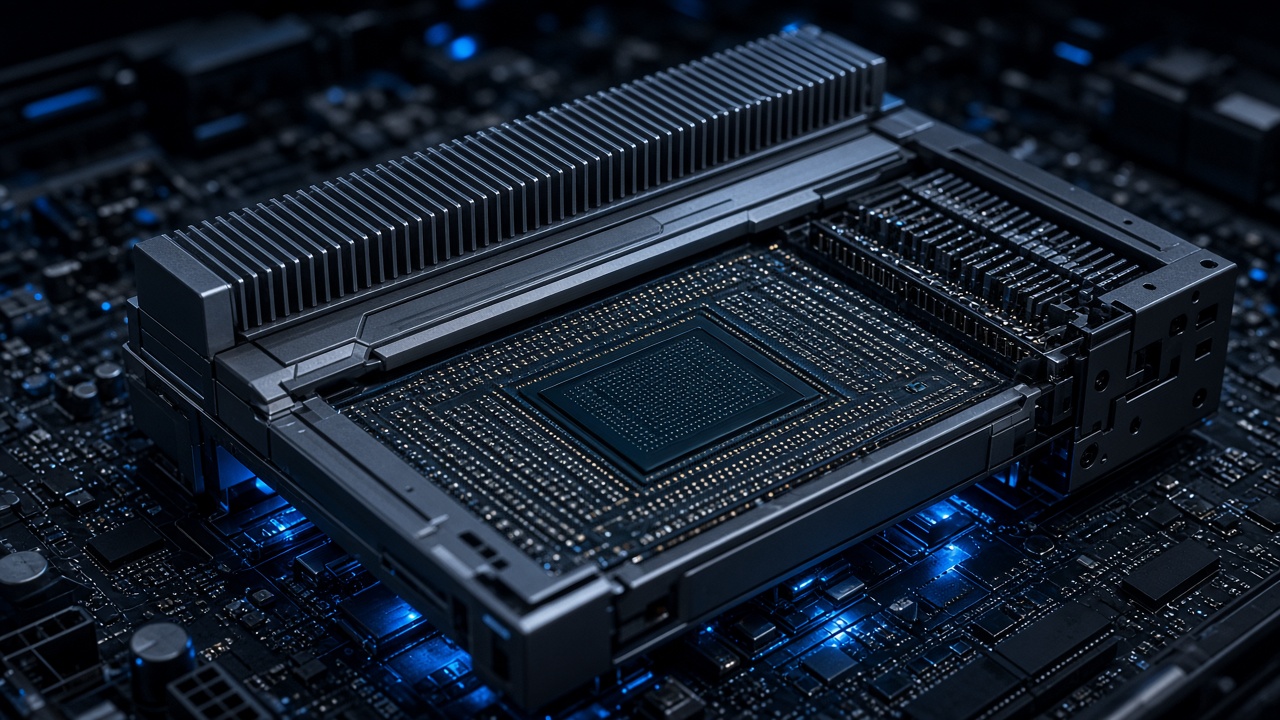
The research also emphasized why GPUs have become the standard platform for modern artificial intelligence. A GPU provides an architecture that is already optimized for parallel numerical computation. More importantly, the hardware is supported by a large software ecosystem. Machine-learning developers can build models using high-level frameworks without manually designing matrix multiplication circuits, memory controllers, or processing pipelines. Hardware-specific optimization still exists, but much of the complexity is hidden behind established libraries and development tools.
An FPGA gives the developer substantially more control but also transfers much more responsibility to the developer.
For highly specialized applications, this control can be valuable. A company deploying the same neural network millions of times may justify spending substantial engineering resources developing a highly optimized FPGA implementation. Likewise, an embedded system with strict requirements for power consumption, latency, or deterministic operation may benefit from an FPGA even if its maximum throughput is lower than that of a GPU.
For general AI experimentation, however, the situation is different. Models change frequently, and researchers need the ability to modify architectures, test new layers, adjust parameters, and rapidly iterate. Reconfiguring and recompiling FPGA hardware creates considerably more development overhead than changing software running on a GPU.
The results of this research therefore suggest that comparing an FPGA and a GPU purely in terms of theoretical parallelism provides an incomplete picture. Development time, tool complexity, hardware resources, model flexibility, and the software ecosystem are equally important factors when selecting an accelerator.
Results and lessons learned
The project did not achieve a major practical acceleration of AI models on the available FPGA hardware. Performance was limited by the capabilities of the FPGA, the complexity of implementing neural-network operations efficiently, and the amount of optimization necessary within Vivado. Nevertheless, this result provided several useful engineering lessons.
- Specialization is not a free lunch.
- AI acceleration is a memory problem as much as a compute problem.
- Software ecosystem dominates practicality.
- Optimization has to start in the architecture.
- The target application decides.
Future work
Aggressive model quantization is the most direct next step. Replacing floating-point operations with 8-bit or lower-precision integer arithmetic could substantially reduce the FPGA resources required for each computational unit, allowing more operations to execute simultaneously.
Another approach is to investigate neural networks designed specifically for constrained FPGA environments rather than adapting conventional models originally developed for CPUs and GPUs. Smaller models could emphasize data reuse and architectures that map naturally onto FPGA pipelines.
A larger FPGA would substantially change the available design space — more DSP, BRAM, and logic — but it would also raise hardware cost and would not eliminate development complexity. Direct comparison against CPU and GPU baselines using latency, throughput, power, utilization, and energy per inference would give a more complete evaluation than execution time alone. An FPGA could remain useful even if it is slower in absolute performance, if it consumes significantly less power or provides more predictable latency.
Finally, higher-level FPGA development tools and machine-learning compilation frameworks could reduce the largest barrier encountered here: the engineering effort required to get effective hardware utilization.
Conclusion
FPGAs appear attractive because programmable logic can be configured into highly parallel, application-specific computational architectures. Neural-network operations such as multiplication and accumulation can theoretically be implemented as pipelines and executed with large amounts of hardware-level parallelism.
In practice, obtaining useful AI acceleration from an FPGA is considerably more difficult than those theoretical advantages suggest. Available FPGA resources limited the amount of parallel computation that could be implemented, while relatively low operating frequencies required significant parallelism to achieve competitive performance. Memory bandwidth, model size, numerical representation, and hardware-resource limitations created additional constraints.
The Vivado development process also demonstrated the substantial engineering effort involved in optimizing FPGA implementations. Creating a design that functions is only the beginning. Achieving meaningful performance requires careful consideration of pipelining, resource utilization, memory architecture, timing, and data movement.
As a result, the project did not produce the substantial AI performance improvement that was originally expected. That outcome is itself an important result. It illustrates why GPUs, despite having less architectural flexibility, remain the preferred hardware platform for most modern artificial-intelligence development. Their enormous parallel computational capability and mature software ecosystem allow machine-learning workloads to be developed and optimized much more rapidly.
FPGAs remain valuable for specialized applications, particularly when power efficiency, custom interfaces, deterministic latency, or highly application-specific processing are important. The results of this research indicate that they are not necessarily an efficient solution for general-purpose AI acceleration on smaller development hardware. Their greatest benefits appear when the workload is sufficiently specialized to justify designing the hardware architecture around the application.
The project therefore provided a useful investigation into both the potential and limitations of reconfigurable computing. Although the FPGA did not provide the desired acceleration, the research demonstrated an important engineering principle: the most theoretically flexible hardware is not always the most practical platform. Performance must be evaluated together with resource constraints, development complexity, software support, and the requirements of the intended application.